I started my C-Net BBS as Virtual Reality in my hometown of Odessa, Texas, in 1989. The restored system information dates its start to October 19 at 3:56 in the morning. It ran under that name until 1993.
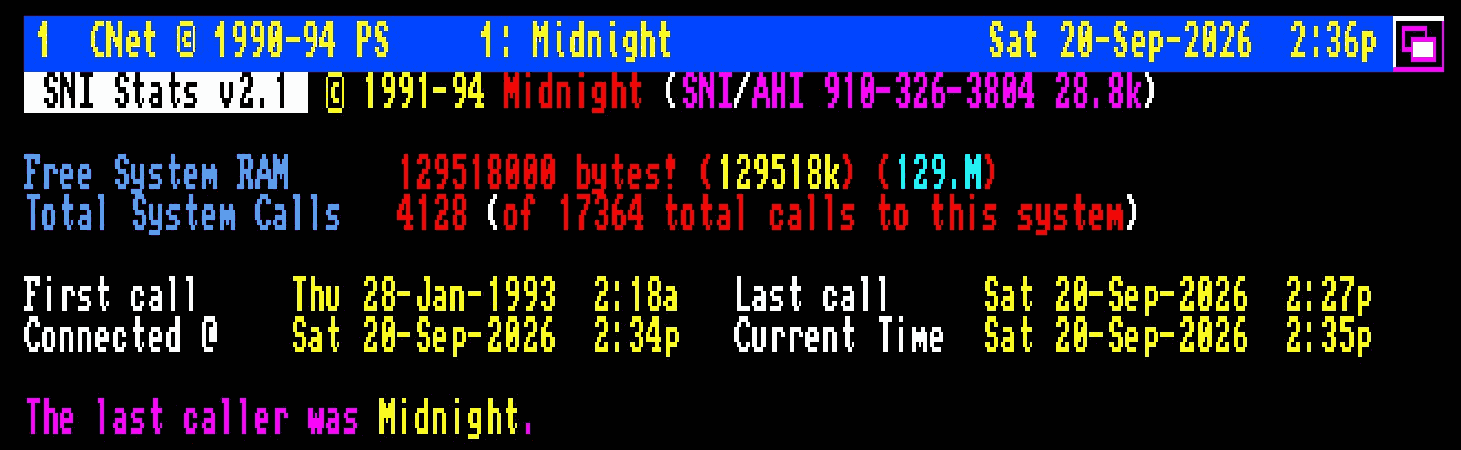
After I moved to North Carolina for the Marines, I renamed it Autumn’s Harvest Inn. Its own statistics tool puts the Inn’s first call at 2:18 in the morning on January 28, 1993. I was Midnight, and the Inn was FidoNet 1:3614/118. I kept it running through 1996. A backup made in 2001 kept enough of it to start again on September 20, 2026.
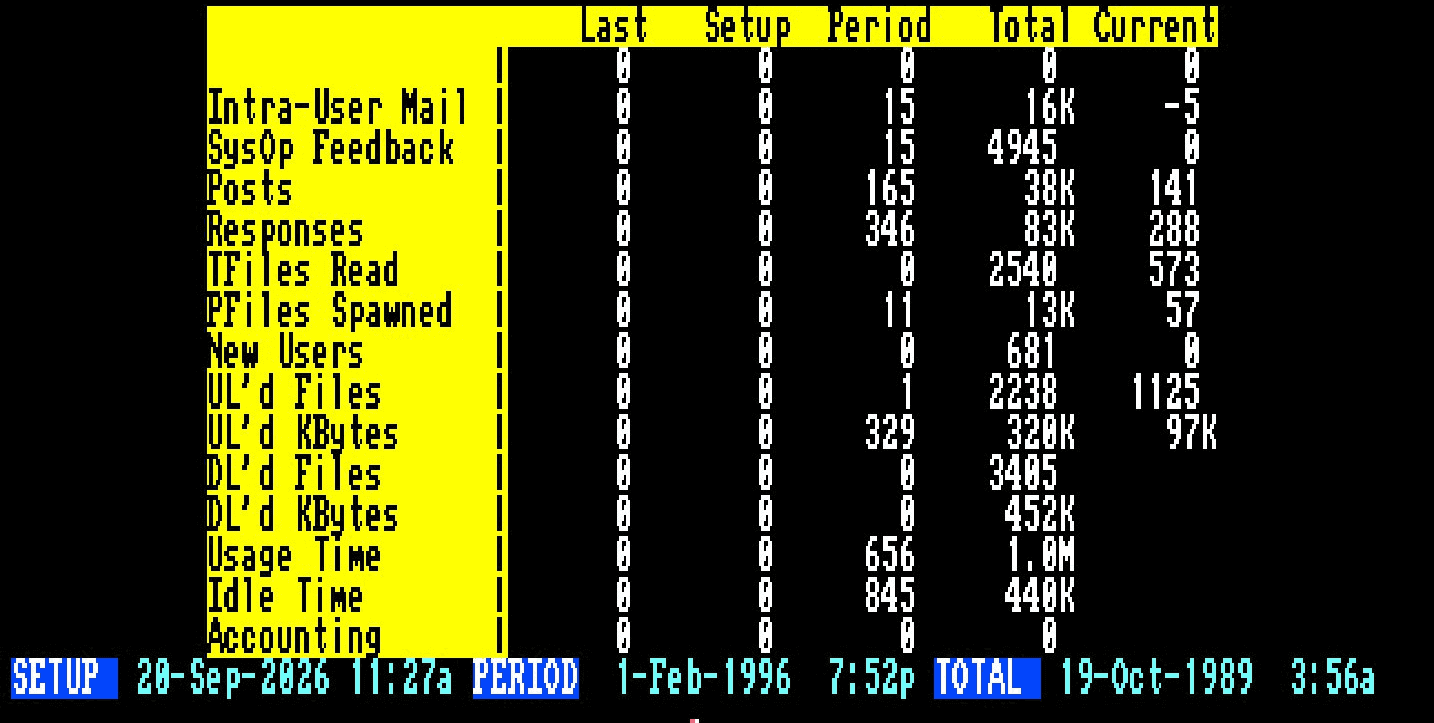
The board’s own counters still run from that first boot. The TOTAL column at the bottom reads 19-Oct-1989 3:56a, and the period above it ends 1-Feb-1996:
My own statistics tool, written for the Inn in the early nineties, still reports the night the Inn itself started answering:
The greeting is still there:
A member of the night watch approaches.
“Welcome to the Inn. Who might you be, friend?”
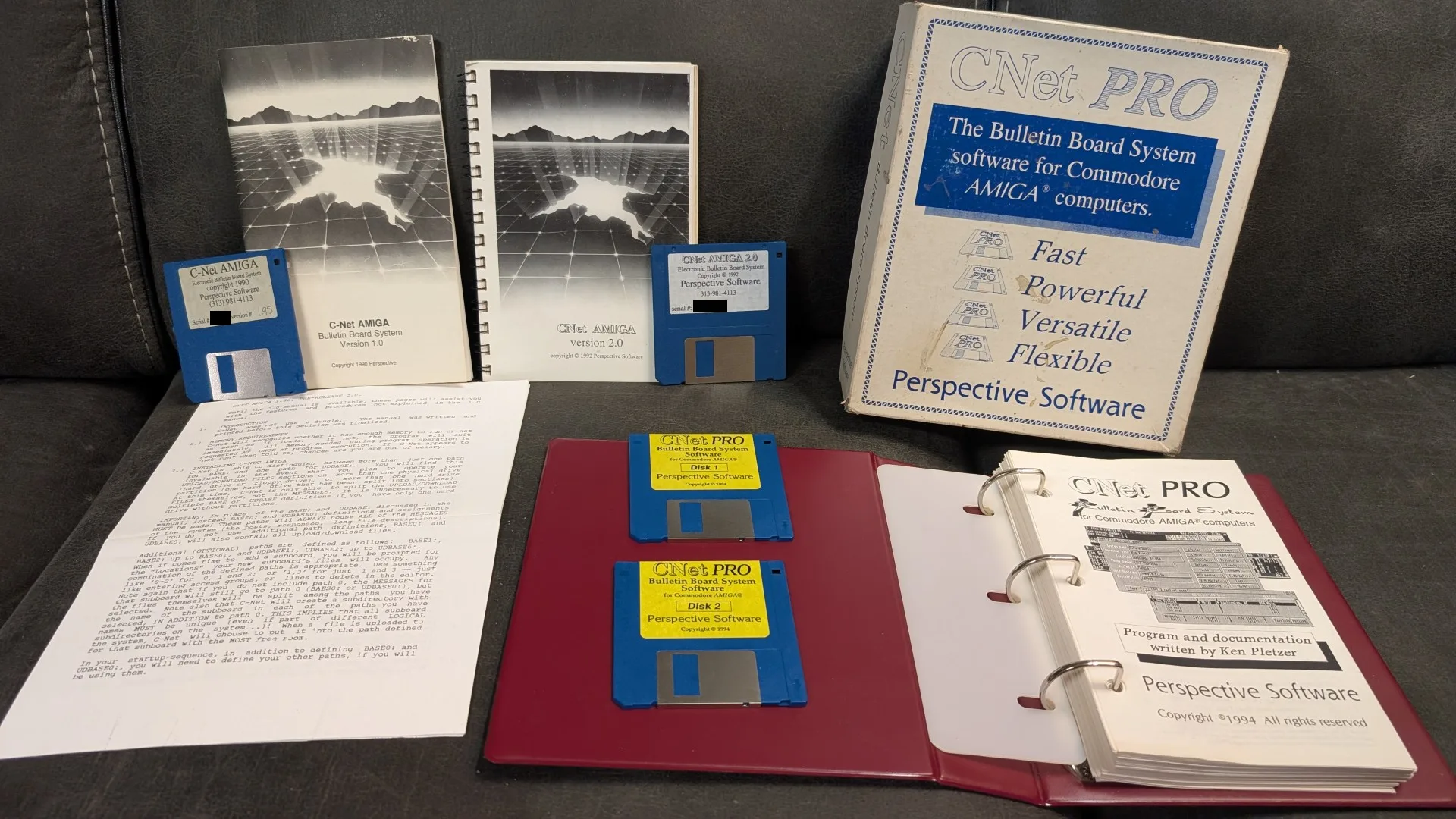
It is running CNet PRO 3.05d inside WinUAE, an Amiga emulator on my PC. The board starts when the emulated Amiga boots. I can log in against the old user file, use the menus, leave feedback, and play Ants through the door menu. Four telnet sessions can reach the login prompt at once. A fifth gets a busy message. This is still local testing. The September 21 Docker trial handled XModem uploads and downloads on an earlier guest configuration. That result does not cover the stock OS 3.1 guest that replaced it.
September 24 update: Zmodem uploads and downloads also worked on the WinUAE board. A 118,572-byte ZIP sent from SyncTERM and downloaded again matched the original byte for byte. That test was on WinUAE, not Docker. I still haven’t tried a caller from outside this PC.
October 21 update: Since October 19, a copy of the Inn also runs under Amiberry in Docker on a second machine at home. On October 20, that copy took calls from this PC through a relay. Access is still restricted; the board isn’t open to the public. The WinUAE board on this PC still hasn’t been called from another machine.
Getting there took more than extracting the backup. C-Net initially exited without saying why. The shared library it needed wasn’t installed. Imaging the original floppies with a Greaseweazle got that part moving, although the matching library later turned up inside an update archive in the board’s own file area. It had been in the backup all along.
After that came the dependencies I had added myself. The main menu needed MainMenuLine, one
of my Spectral Neurologix tools. The menu commands depended on a tiny ARexx script called
addkeys.rexx. Both survived under different paths.
The door games were another puzzle. A door is a separate program the BBS runs for a caller, often a game. These froze until the startup matched C-Net’s own installer: start the FIFO handler as a program and let it establish its device. The hand-built mount entry from the restoration had been wrong. Once that was fixed, the old door menu could launch programs again.
The account count needed correcting too. There are 325 records in the recovered user file, but 195 are deleted slots. That leaves 130 live accounts. Their data stays local.
There is a much larger gap that no amount of startup debugging will fix. The backup contains
eight volumes, but Mail: isn’t one of them. The board still has the structure of its message
areas and statistics recording roughly 38,000 posts and 83,000 responses. The messages themselves
are missing, along with private mail and parts of the network setup. The restored areas open
empty.
Other things survived surprisingly well. There are game saves, ANSI screens, configuration files, and the SN DoorMenu release I packaged in October 1995. The board’s software also turned out to contain a five-byte change worth investigating.
The announcements I wrote for callers survived too. In the GeekCode notice, I introduced my example with:
Here’s an example, for those of you lucky enough not to have seen mine a hundred times already:
For now, the Inn answers again. Somewhere in physical storage there may still be a CD from the 1990s with the missing mail volume on it.